
El Argentino — a guitar by Louis Scafa, New York City.
~ Built in 1956 ~

The Man Behind the Label
Louis Scafa came from Argentina. He trained in Madrid under Manuel Ramírez — one of the most influential guitar makers in history, whose workshop shaped nearly every great luthier of the twentieth century. Scafa eventually made his way to New York, where he set up his workshop on Second Avenue in a neighborhood known as Little Spain.
He advertised himself simply: Forty-five years of experience. Pupil of Manuel Ramírez. He built, repaired, and refinished guitars, mandolins, banjos, and violins. He worked quietly, in a small room fragrant with hide glue and fresh-cut spruce, year after year, in a city that was always moving faster than he was.
The label inside each guitar he completed recorded one thing in his own handwriting: the year. In the case of this guitar, known as El Argentino., it reads Año 1956.


The Rosette
Most guitar rosettes are made of thin strips of colored veneer — precise, geometric, systematic. This one is different. Each piece of abalone was cut by hand, shaped to fit its neighbors, and set individually into a channel routed around the soundhole. The result shifts from blue-green to gold to silver-white depending on the light.
It is, in the most exact sense, marquetry — the craft of composing a surface from cut pieces of natural material, fitted so precisely that the joints disappear.
It is not merely decorative. It is a signature.
The Headstock
Running the full length of the headstock’s center rib is a strip of marquetry inlay: alternating diamond-shaped lozenges of light and dark wood, set with a precision that has not loosened in seventy years. The pattern creates an optical illusion of depth — a chain of interlocking cubes that appear to recede into the wood.
This detail is too fine to be seen from the audience. It exists solely because the maker felt it should be there.


A Lineage in Wood
Louis Scafa learned his craft from Manuel Ramírez.
Manuel Ramírez was born in Madrid in 1871 and died in 1916. He is considered one of the most influential guitar makers in history. His workshop shaped nearly every great luthier of the twentieth century. Many of his students including: Santos Hernández, Domingo Esteso, Modesto Borreguero, became masters in their own right, spreading the Madrid school of guitar making across Europe and the Americas.
Scafa was a branch of that same tree.
The Wood
The soundboard is spruce — old-growth, with grain lines so tight they are almost impossible to count. Aged seventy years, it has deepened to a warm amber.
The back and sides are figured rosewood, bookmatched so that the grain mirrors symmetrically on either side of the center seam. These are the materials of a serious instrument, chosen by someone who understood what each one would contribute to the finished voice.
The wood does not lie. It is exactly what it is.


The Tuning Machines
The original brass tuning machines are still mounted on their original plates, still held by their original screws. The amber celluloid buttons have yellowed with age but remain intact — no cracks, no replacements. Seventy years of hands turning them to pitch, and they have not been swapped for something newer.
This is unusual. Tuning machines are among the first things to be replaced on a vintage instrument — worn gears slip, buttons crack, and modern replacements are cheap and easy to fit. That these survive says something about the care this guitar has received, and about the quality of what Scafa installed in the first place.
They are small things. They do their job without drawing attention. That is the point.
The Fretboard
The fretboard is ebony — dense, close-grained, nearly black. It has been worn smooth by decades of use, the surface polished not by any tool but by the fingers that have pressed against it, chord after chord, note after note.
The frets themselves are original. They show the shallow grooves of years beneath nylon strings, but they remain level and true. On a lesser instrument, frets wear unevenly and need replacing. Here, the work has held.
At the top of the neck, just visible where the strings cross the nut, the marquetry strip begins its run down the headstock — a quiet announcement that this is not an ordinary guitar.


New York City, 1956
The year this guitar was built, Miles Davis recorded ’Round About Midnight. Elvis Presley released his first record for RCA. The Palladium Ballroom on Broadway was at its peak — Tito Puente and Tito Rodriguez filling its floors with mambo and cha-cha, the sound of a Latin New York finding its voice.
On Second Avenue, in a workshop that smelled of varnish and wood shavings, an Argentine luthier bent over a spruce soundboard and placed abalone shell, piece by piece, around a soundhole.
He wrote the year in his own hand on the label: Año1956.
A Note for the Reader
The story told in these pages — of a craftsman who left his homeland, crossed an ocean, and built a life in a new country through the work of his hands — is not only Scafa’s story. It belongs, in its essential shape, to another man as well.
Jan Szubski brought his wife Annia and their daughter Monika to America from Poland in 1987. He brought what Scafa had brought before him: the knowledge in his hands, an immigrant’s determination, and a passion for music and artistry that would not be denied.
He is an exceptional guitarist. And he is a craftsman — a master woodworker whose specialty is hand-cut marquetry. Which means that when he looks at the rosette of this guitar, he sees the hours. When he looks at the headstock inlay, he recognizes a fellow craftsman’s signature and quality of attention.
This guitar was built in 1956 — the year Jan was born — by a man who crossed an ocean to practice his craft in a new world.
It seems right that it should end up in his hands.

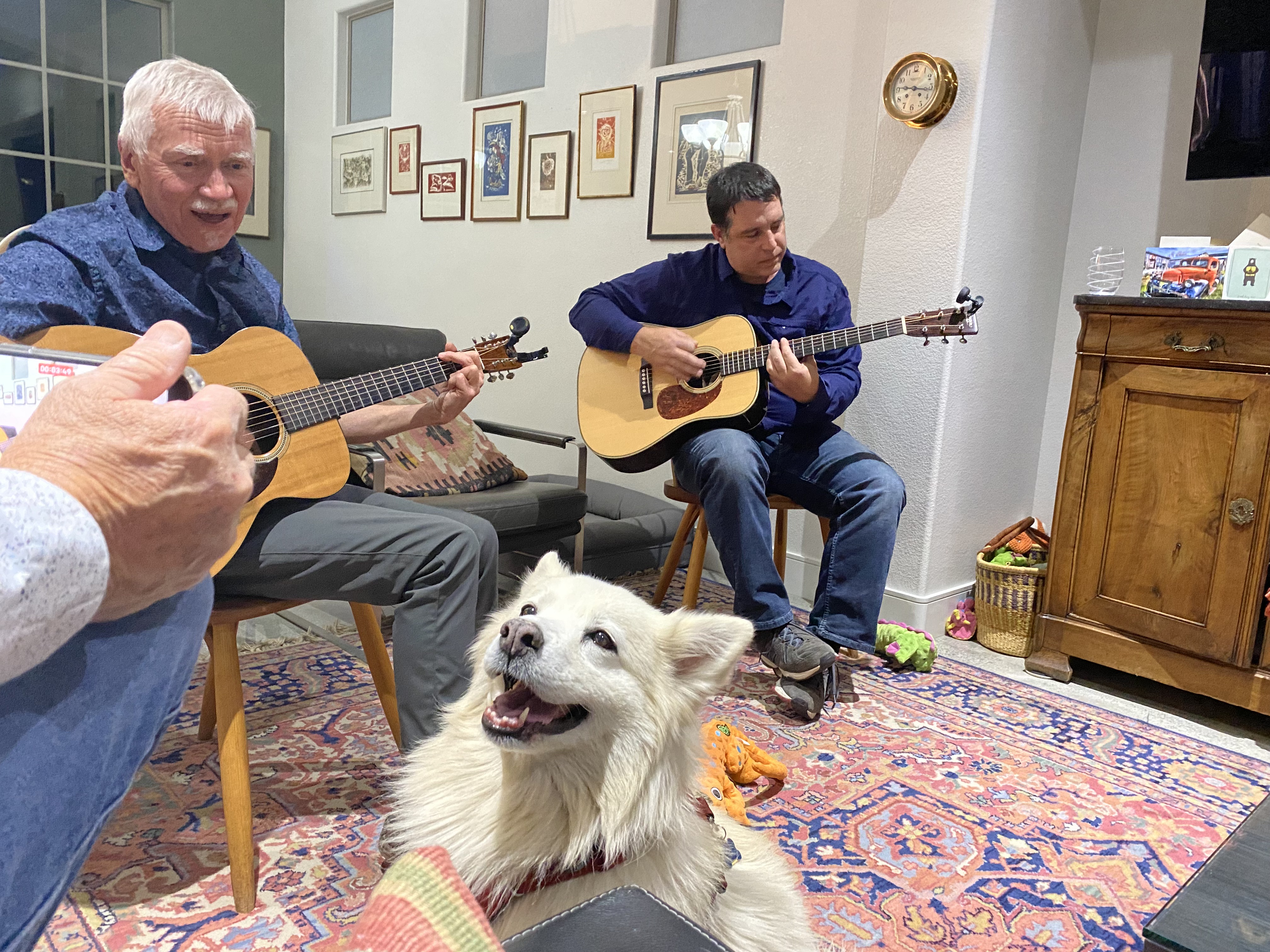
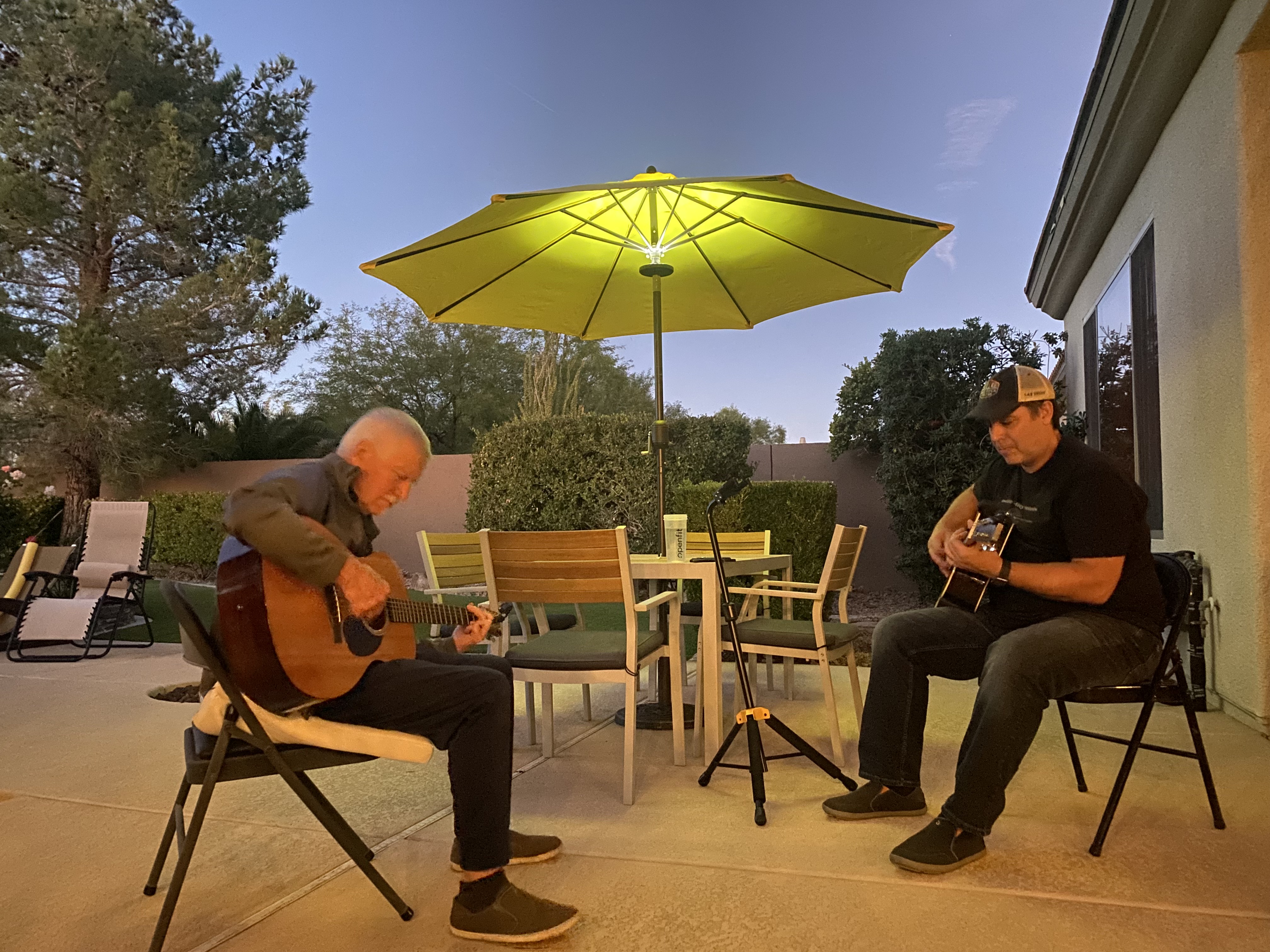
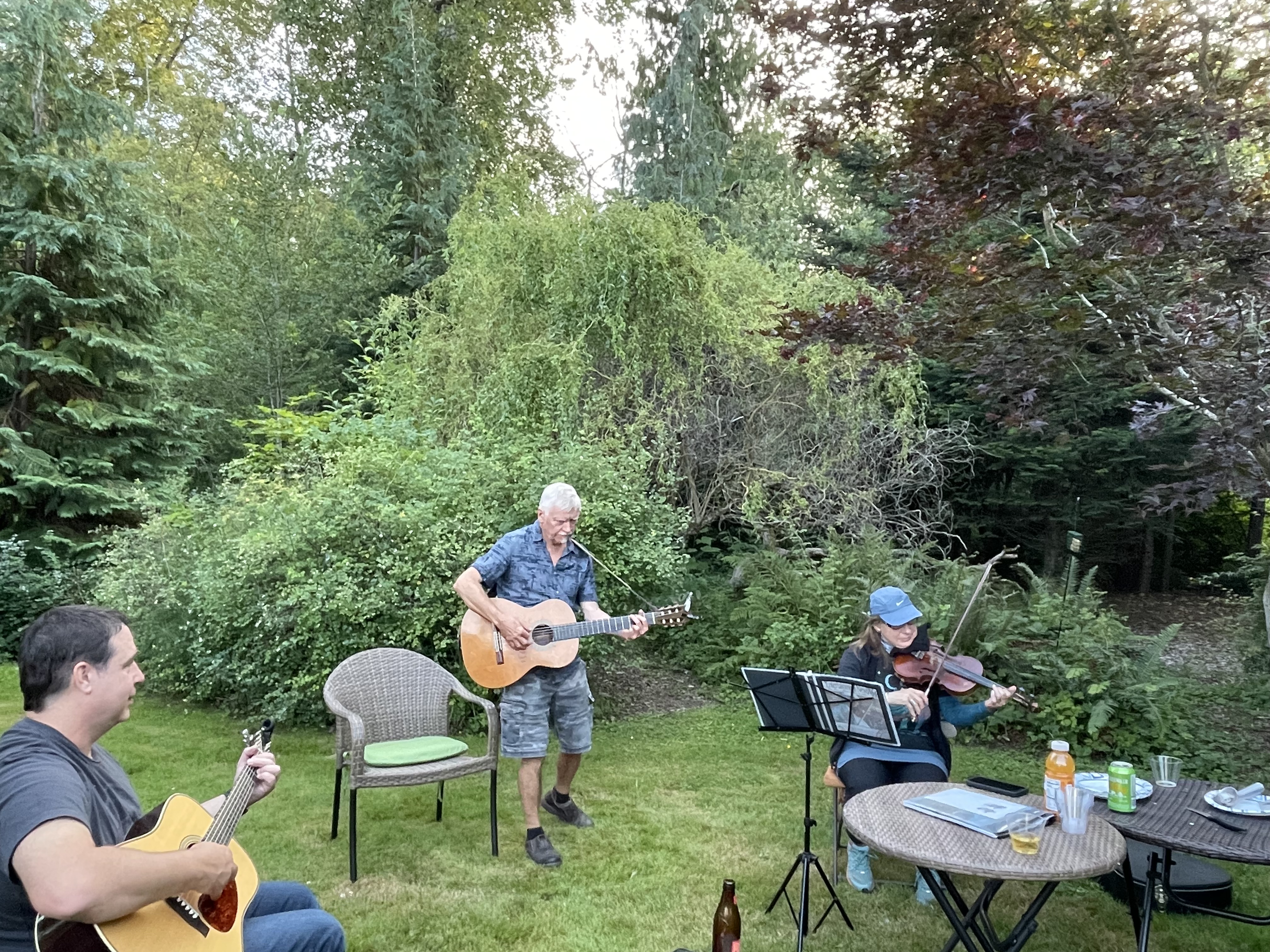
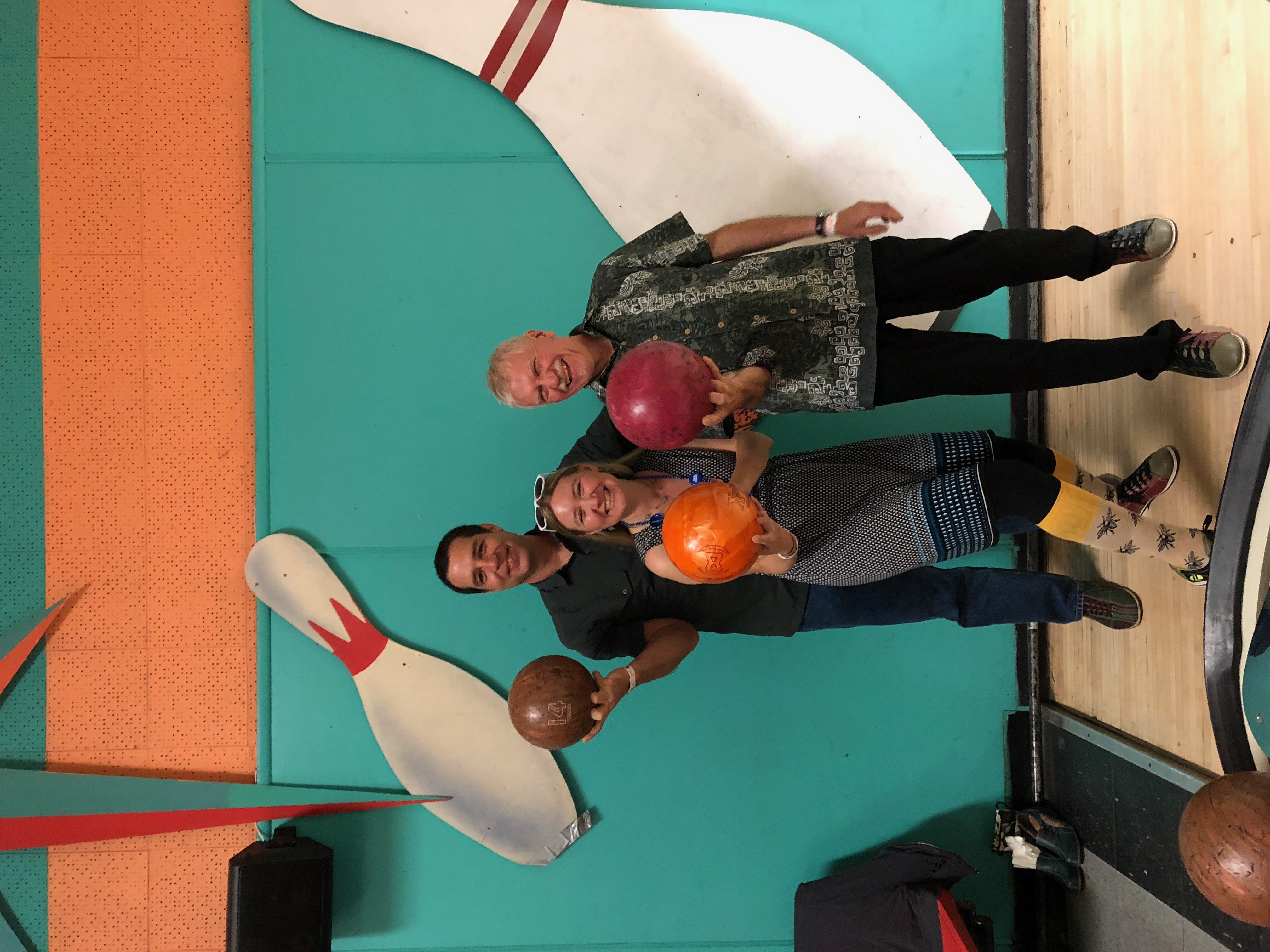

Happy Birthday Jan
from Monika & Brandt

For Jan • 1956